 Back
BackIn Indian culture and thought, sound has long been considered a medium through which to experience truth - to unveil the sacred and, ultimately, to experience oneness with the universe.
Nāda Brahman is the idea that the universe is born of and sustained by cosmic sound; or, simply, that the universe is sound. Aum, the sacred syllable, is representative of this sound - a vocal manifestation of the cosmic vibration. Brahman: ultimate reality. Nāda: sound, vibration.
Indian thought distinguishes between two forms of nāda: āhata, struck or audible sound, and anāhata, the unstruck sound - the inner sound, the primordial vibration that exists beyond material form.
Everything, then, can be experienced as sound.
Perhaps this is why the observance and performance of sound in our culture has historically been treated with such spiritual significance - approached with respect, grace and elegance. The arts were never merely a source of casual entertainment. They were refined and ordered, treated as a conduit to the deeper truths of the human experience.
The Nāṭya Śhāstra, attributed to the sage Bharata Muni and composed over centuries around the beginning 200 BCE, is perhaps one of the greatest expressions of this understanding. It is an all-comprehensive literature that lays out the principles and ideal ingredients of the performing arts in an attempt to ever preserve their sanctity. It is a relentless work covering every sphere of artistic expression, unwilling to leave its conditions to chance.
It considers not only what is performed, but the how, where, who, why, when - and the receiver
Creator. Creation. Audience. Space.
Each is considered part of the conditions through which one may create a transcendental experience.
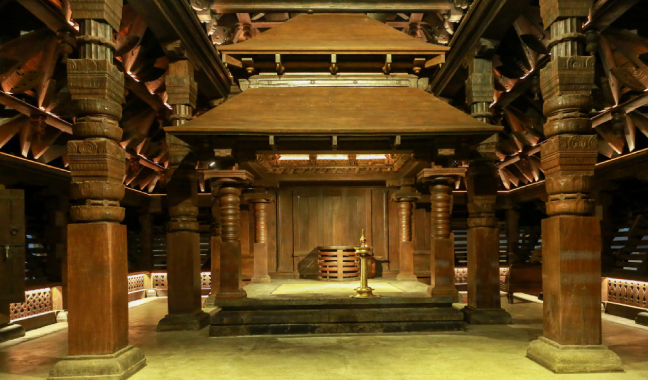
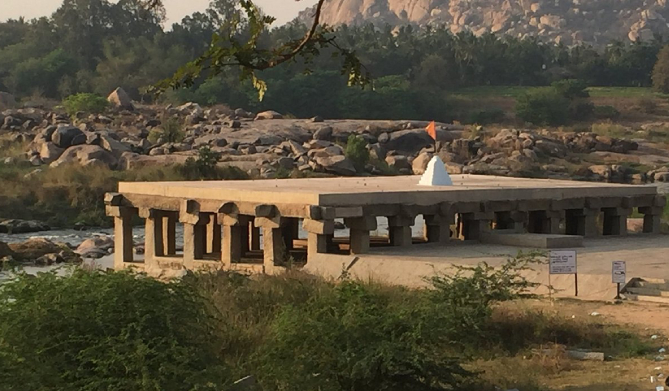
Among its countless subjects, it outlines rasa - the emotion to be evoked and the aesthetic experience received; kutapa - the organisation and placement of musicians; the nāṭyagṛha and the mandapa - the architecture of the performance space itself, including the spatial relationship between audience and performer.
To us, Nisarga Art Hub is reminiscent of such a place.
A modern rendition - harmonising the wisdom of the old with the needs of the new, preserving those immutable, idyllic conditions in which honest creation can take life.
A place built with intention. A creation of excellence.
Built in Kerala, India, by Wallmakers for a family of musicians, Nisarga is a community residency and performance space conceived around music, gathering and artistic exchange. Its name, Nisarga, means the natural state. According to the family who conceived it, the idea is simple: when someone comes here, they should be able to be themselves. An artist should be able to express their truest self - create honest art.
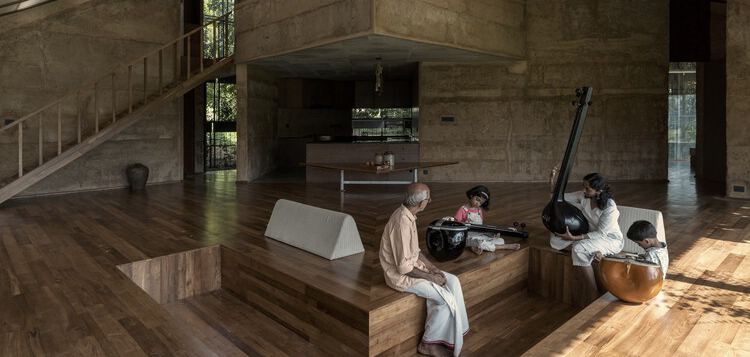
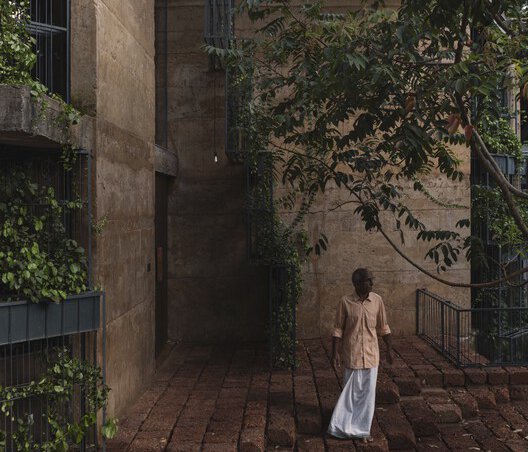
Its physical vernacular borrows from its local vocabulary. Walls are made from construction debris gathered from the neighbouring town and soil from the site. Reclaimed laterite from demolished buildings forms the verandah. The interior remains largely open and without conventional furniture, shaped around sitting, gathering, listening and exchange.
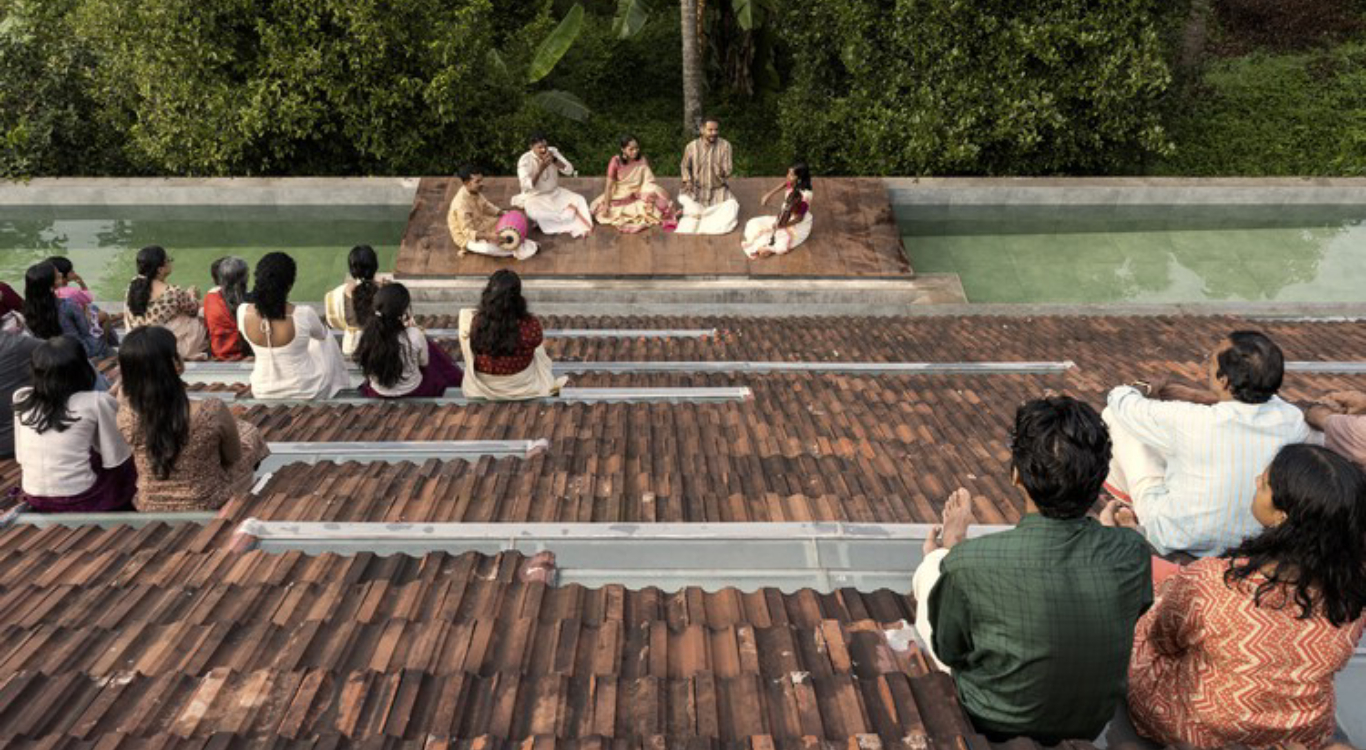
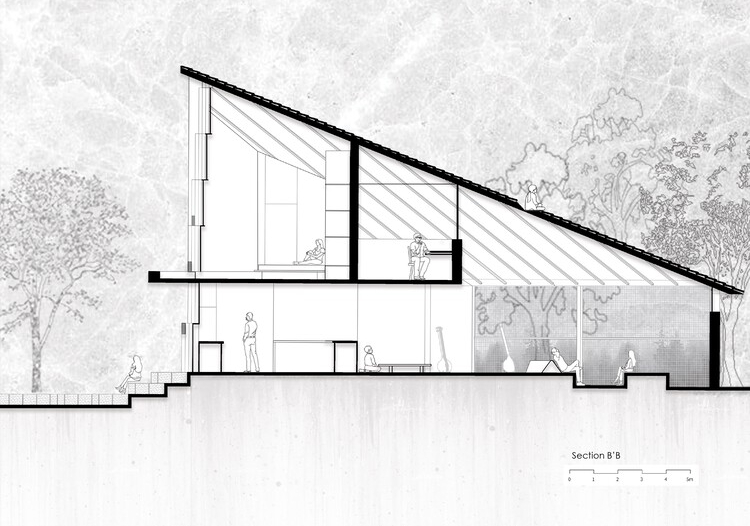
It features great pitched, terracotta-tiled roofs - traditionally effective regulators of heat but increasingly disappearing from contemporary construction. The 35-degree pitch of the roof opens through great slits of light, allowing those same openings to become seats for an audience. It meets almost naturally with the approximately 30-degree inclination of an open-air amphitheatre. Its incline creates seating overlooking the pool below; wooden planks laid across the water transform that pool into a stage.
Architecture, landscape and performance cease to exist as separate things.
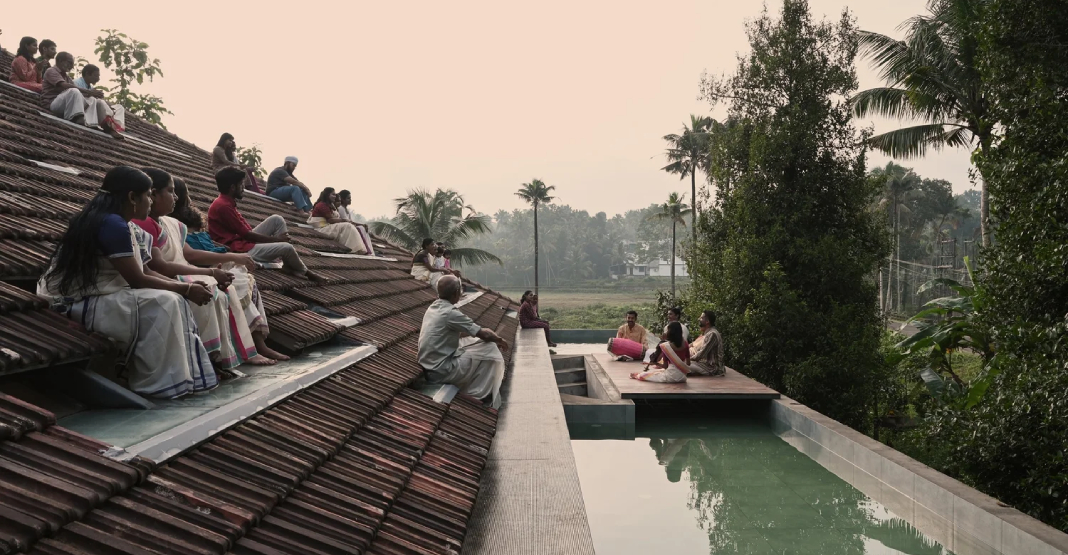
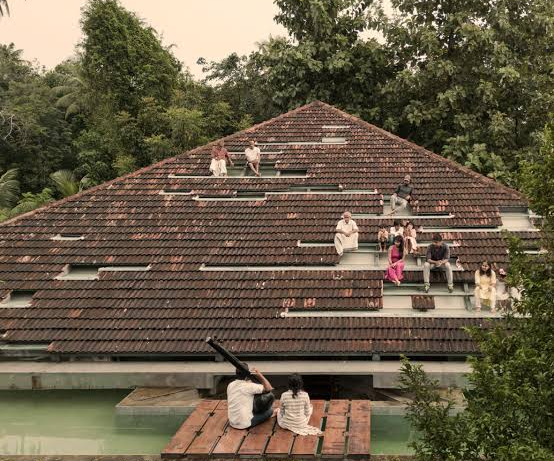
Here, the elements become your audience.
Earth. Water. Air. Light. And the people who have gathered to listen.
It is a place built with so much devotion that it quietly demands the same devotion from each creator who enters it.
At a time when music can be made for the speed of the next hit, when the artist can so easily become the entertainer and create another piece of content to be consumed, Nisarga makes space for another possibility: honest music.
A place for the musician, artist, traveller or fellow seeker to arrive without having to become anything else.
To create sounds natural to their own soul - experience oneness with the universe.
It moves us, it brings back the grace performing arts deserve and reignites the beautiful sparks of a simple yet intentional way of being.
(Photography: Syam Sreesylam. All Nisarga Art Hub courtesy of ArchDaily).